Running a freelance business
Working directly vs through agencies as a freelancer
Pros and cons of direct clients versus agency work for freelancers.
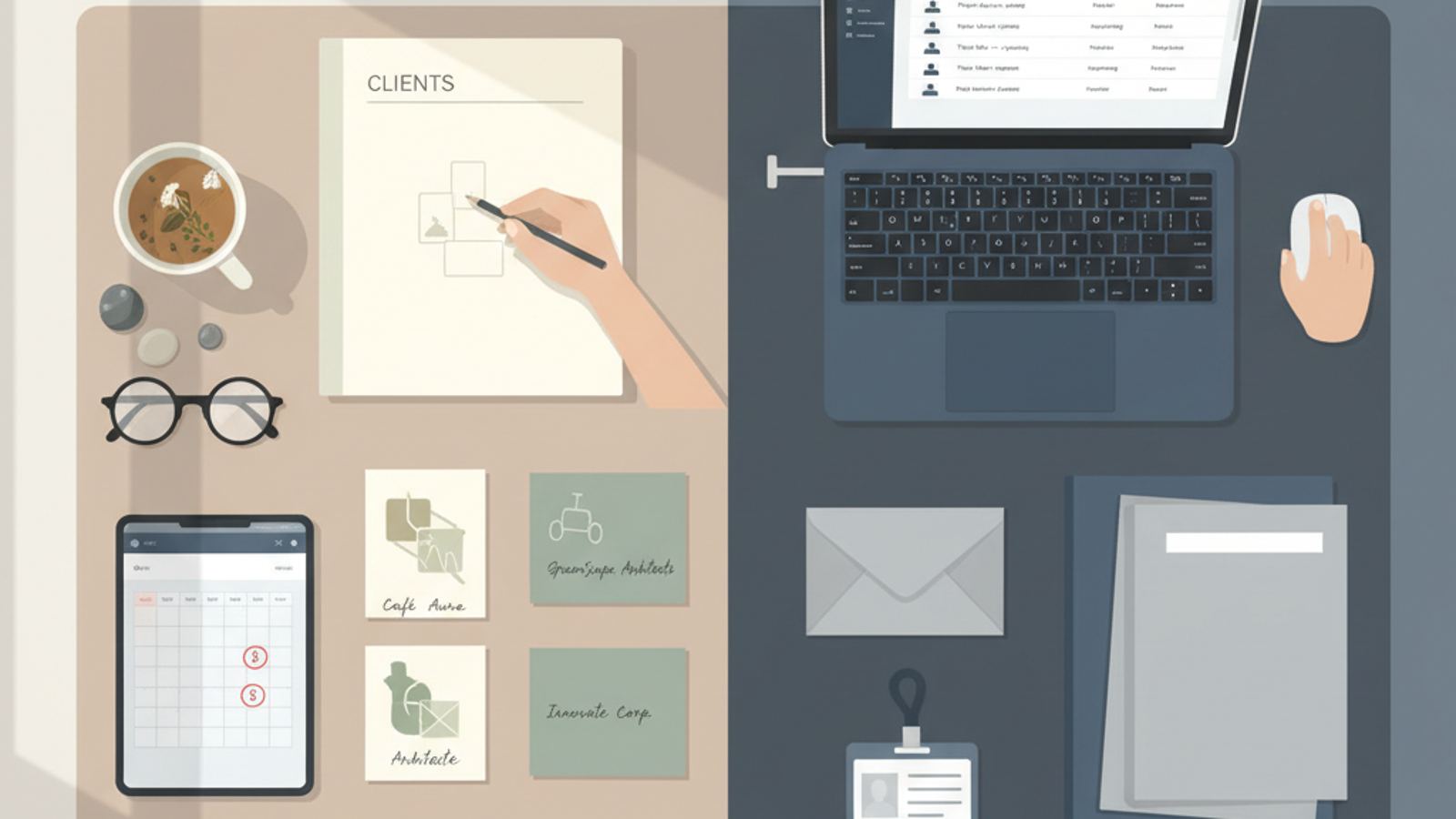
Freelancers often navigate a strategic decision: whether to pursue direct client relationships or work through agencies. Each path presents distinct advantages and challenges regarding project stability, compensation, client interaction, and business development. Understanding these differences is crucial for establishing a sustainable and profitable freelance career.
While direct client work often offers higher earning potential and more direct control over projects, it demands significant effort in sales, marketing, and client management. Conversely, agency work can provide a steady pipeline of projects with reduced administrative overhead, though often at a lower per-project rate. A thoughtful approach involves weighing these trade-offs and potentially integrating both models into your freelance strategy to leverage their respective strengths.
01
The Direct Client Engagement Model
Working directly with clients means you are solely responsible for every aspect of the project lifecycle, from initial outreach and proposal writing to project execution, invoicing, and follow-up. This model typically offers the highest earning potential, as there is no intermediary taking a percentage of your rate. It also allows for a more intimate understanding of the client's business objectives and a greater degree of creative control over your work.
The direct client model fosters deeper relationships, enabling you to become a trusted advisor rather than just a service provider. This can lead to longer-term engagements, repeat business, and valuable referrals. However, securing direct clients requires a proactive approach to sales and marketing, effective client onboarding, and robust client communication. You need systems for client management for freelancers and robust project management for solo freelancers to ensure smooth operations.
- Higher direct revenue potential due to no intermediary fees
- Deeper client relationships and direct strategic input
- Full control over project scope, pricing, and execution
- Opportunity for long-term, retainer-based partnerships
- Requires active sales, marketing, and client relationship management
Before
A freelancer juggles inconsistent direct client requests with sporadic agency tasks, feeling overwhelmed and unsure which path to prioritize. Project details and finances are scattered across spreadsheets and email threads.
After
Using a unified system, the freelancer clearly allocates time between direct, high-value projects and stable agency work. All tasks, deadlines, and financial data are organized, allowing for strategic decisions on future growth.
02
The Agency Partnership Model
Partnering with agencies positions you as a subcontractor, completing work on behalf of the agency for their end clients. This model often provides a consistent flow of projects, reducing the need for continuous self-promotion and sales effort. Agencies typically handle the client acquisition, initial project briefing, and sometimes even the final client communication, allowing you to focus primarily on execution.
While agency rates are generally lower than what you might charge a direct client, the trade-off is often a reduction in administrative burden and a more predictable workload. It can be an excellent way to diversify your client base and gain exposure to different types of projects or industries without the overhead of direct sales. Effective collaboration within this model requires clear communication with agency project managers and adherence to their processes, making a reliable freelance task tracker essential.
- Consistent project flow and reduced sales effort
- Less administrative burden (sales, marketing, invoicing)
- Exposure to diverse projects and industries
- Can be a gateway to larger, more complex projects
- Requires strong collaboration and adherence to agency workflows
03
Evaluating Financial Returns and Stability
When considering financial returns, direct clients generally offer a higher hourly or project rate, as you are capturing the full value of your services. This can translate to greater income per project. However, the inconsistency of securing these direct projects, coupled with the time invested in non-billable sales and marketing activities, can impact overall income stability. Effectively managing your how to estimate freelance projects and how to price freelance projects is key here.
Agency work, while often offering lower per-unit compensation, can provide more stable and predictable income due to a steady stream of assignments. The cumulative effect of consistent agency projects can sometimes outpace the intermittent, higher-paying direct client work, especially if your sales pipeline for direct clients is not fully robust. Many freelancers find a blend of both models provides the best of both worlds: higher-paying direct work balanced by the stability of agency projects. Tools that help you track client rates are invaluable for comparing value.
- Direct clients: higher per-project rates, but potential income variability
- Agencies: lower rates, but greater income stability and reduced sales overhead
- Non-billable time (sales, admin) is a significant factor in direct work
- Track all income streams to understand true profitability
- A hybrid approach can balance high earnings with stability
Step by step
- 1Assess your current financial goals and risk tolerance.
- 2Evaluate your capacity for sales, marketing, and client management.
- 3Identify your preferred level of creative control and client interaction.
- 4Determine a strategic percentage split for direct vs. agency work.
- 5Implement a robust project management tool to track all client types.
- 6Regularly review profitability and satisfaction from each model.
- 7Adjust your strategy based on data and personal preferences.
04
Client Relationship and Project Control
Direct client relationships offer unparalleled control over your projects. You have a direct line to decision-makers, allowing for clear communication, direct feedback, and the ability to influence strategy and project direction. This often leads to more satisfying work and the opportunity to build strong, long-term partnerships. Establishing strong client communication tips for freelancers and clear client brief template processes are critical for success in this model.
With agencies, your primary relationship is with the agency project manager, not the end client. This can create a buffer, reducing direct client communication demands but also limiting your ability to shape project strategy or engage directly with the client's vision. You're executing a brief provided by the agency, which has already been filtered through their interpretation. While this streamlines workflow, it also means less autonomy and often less direct credit for the final outcome. Understanding how to handle scope creep with agencies is also important, as they often have their own processes.
- Direct: full control, direct client feedback, strategic influence
- Agency: execution focus, less direct client interaction, limited strategic input
- Strong client relationships in direct work lead to referrals
- Agency work relies on clear communication with agency contacts
- Understand that agencies are your client in this scenario
Email Template: Proposing a Hybrid Engagement Model to an Agency
Subject: Partnership Opportunity: [Your Name/Company] and [Agency Name]

Dear [Agency Contact Name],

I hope this email finds you well.

I'm writing to express my continued interest in collaborating with [Agency Name] on [mention specific project types or skills]. I value the consistent flow of interesting work and streamlined process that your agency provides.

As I continue to evolve my freelance business, I'm exploring a balanced approach that combines agency partnerships with a select number of direct client engagements. This strategy allows me to maintain a diversified income stream and continuously hone my skills across varied project scopes.

My typical availability for agency work is [X] hours per week/month, which I commit to delivering with the same quality and efficiency you've come to expect. This ensures that I can reliably support [Agency Name]'s project needs while also cultivating my direct client relationships.

I believe this hybrid model offers mutual benefits: your agency gains a reliable and experienced resource, and I maintain a sustainable and diversified freelance practice. I'm keen to discuss how we can continue to collaborate effectively under this structure.

Please let me know if you'd be open to a brief call to discuss my availability and how we can best align our work moving forward.

Thank you for your time and consideration.

Sincerely,
[Your Name]
[Your Website/Portfolio Link]
05
Administrative Burden and Business Development
The administrative load differs significantly between these two models. With direct clients, you are responsible for the entire business development cycle: lead generation, proposals, contracts, client onboarding checklist, invoicing, and collections. This requires a substantial investment of time and effort beyond the actual billable work. Implementing a robust freelance business systems and a project management tool for freelancers can help manage this overhead.
Agencies typically absorb much of this administrative burden. They handle the sales, contract negotiation with the end client, and often consolidate invoicing for multiple projects. Your primary administrative task with an agency is to submit your work and sometimes your time sheets, streamlining your workflow. This allows you to spend more time on billable work, but it also means less direct control over your freelance sales pipeline and less opportunity to build your own client portfolio independently. Freelancing for multiple agencies requires careful organization.
- Direct: high administrative load (sales, contracts, invoicing)
- Agency: reduced admin, focus on execution, agencies handle most overhead
- Direct work builds your personal client list and brand
- Agency work can be a stepping stone to direct work
- Effective tools like AI for freelance admin can mitigate direct client overhead
06
Strategic Integration for a Hybrid Approach
Many successful freelancers adopt a hybrid model, balancing direct client work with agency partnerships. This strategy allows you to leverage the higher earning potential and strategic depth of direct clients while benefiting from the stability and reduced sales effort of agency work. The key is to manage these diverse relationships effectively, using a project management tool like kliendo that can handle multiple clients as a freelancer and track task statuses for freelancers across various projects.
Developing a clear strategy for how much of your capacity to allocate to each type of engagement is vital. Use tools to conduct capacity planning for freelancers, ensuring you don't overcommit. This integrated approach demands strong organizational skills and a system for prioritizing freelance work across clients. By consciously segmenting your workload and refining your processes for each type of client, you can build a resilient and diversified freelance business.
- Combine direct and agency work for balance and resilience
- Allocate capacity strategically between engagement types
- Utilize a project management tool designed for multiple clients
- Maintain distinct communication protocols for direct clients vs. agencies
- Regularly assess the profitability and satisfaction from each model
Action checklist
- Define your ideal client profile for direct engagement.
- Research agencies specializing in your niche and reach out proactively.
- Establish clear contracts and payment terms for both client types.
- Set up separate tracking for hours and revenue per client type.
- Develop distinct communication strategies for direct clients vs. agency contacts.
- Allocate specific blocks of time for business development and project work.
- Regularly update your portfolio with diverse project examples from both models.
Frequently asked questions
- Is it better to work with direct clients or agencies?
- Neither is inherently 'better'; it depends on your business goals, risk tolerance, and desired workload. Direct clients offer higher pay and control but demand more sales effort, while agencies provide stability and less admin at a typically lower rate. Many freelancers find a hybrid approach most effective.
- How do rates differ between direct clients and agencies?
- Direct clients usually pay higher rates because you capture the full value of your services without an intermediary fee. Agencies typically mark up your rate to their end client, meaning your compensation as a freelancer is often 15-30% lower than what you might charge a direct client for similar work.
- Can I work with both direct clients and agencies simultaneously?
- Yes, many successful freelancers adopt a hybrid model. This strategy helps diversify income, reduce reliance on a single source, and leverage the strengths of both engagement types. Effective organization and time management are crucial for success in a hybrid model.
- What are the main administrative differences?
- Working directly requires managing all sales, marketing, contracts, invoicing, and collections yourself. Agencies handle most of these tasks, allowing you to focus primarily on project execution. This significantly reduces your administrative burden in agency partnerships.
Put it into practice
Keep every client and task in one clear view
kliendo is a client-first workspace for freelancers, with AI that turns notes into tasks. Prefer a walkthrough first? Browse the step-by-step guides.
Create account